
At some point, every business owner looks at their calendar and wonders what kind of cosmic joke it’s playing. It’s color-coded, synced across devices, beautifully blocked off into neat little chunks, and still, you end each day with more undone than done.
You’ve read the productivity blogs. You’ve tried time-blocking. You’ve got all the apps. And yet, here you are again…overwhelmed, overbooked, and quietly resenting the very tool that’s supposed to make life easier.
The truth is, your calendar isn’t broken. It’s just doing exactly what you told it to do.
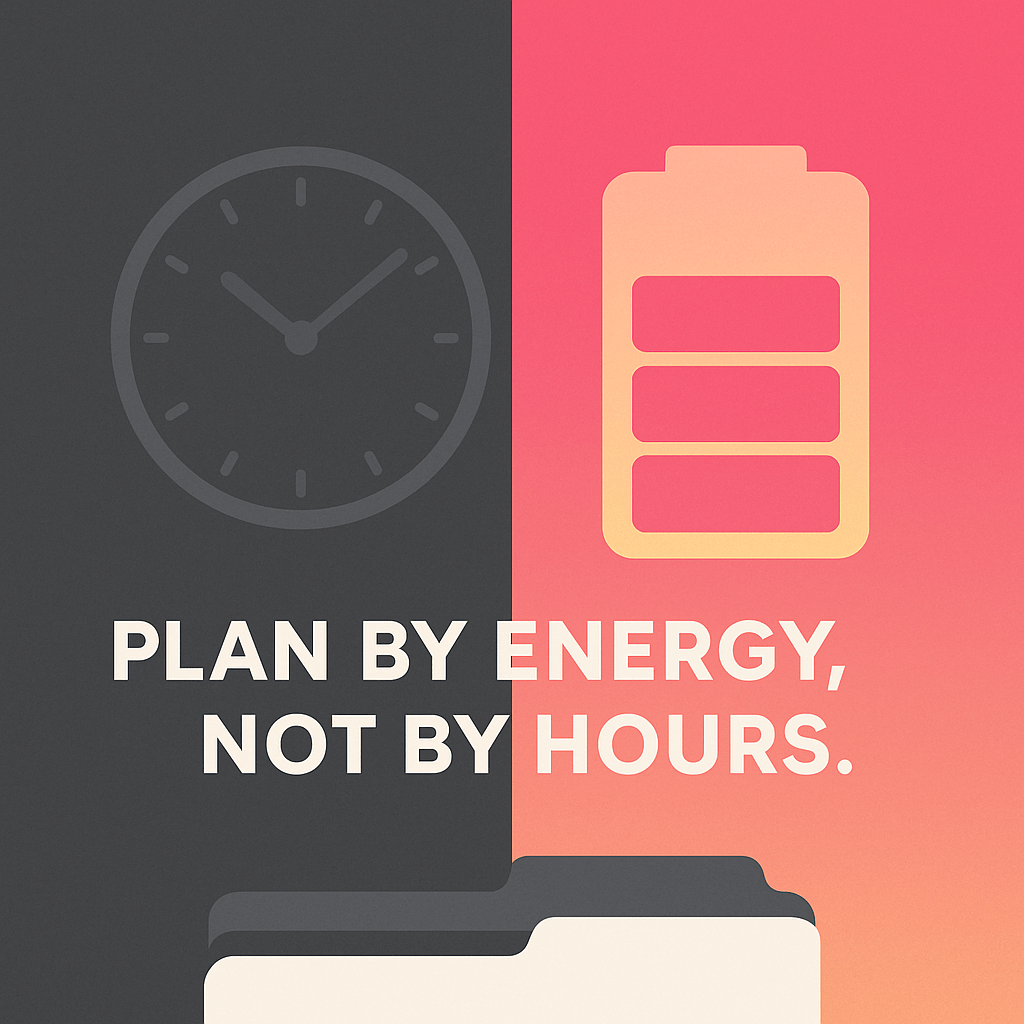
You’re Scheduling Time, Not Energy
Most people use their calendars like math problems: if a task takes an hour, they schedule an hour. Done. But time doesn’t tell the whole story.
It doesn’t account for how long it takes to switch between tasks.
It doesn’t factor in decision fatigue, interruptions, or the mental lag that comes from bouncing between client calls and creative work. And it definitely doesn’t care that you need an actual lunch break, not a sandwich inhaled over your keyboard.
When you treat your calendar like a machine instead of a reflection of your capacity, you end up filling every square inch of it and then wonder why it feels like drowning.
You don’t have a time management problem. You have a bandwidth problem.
The Calendar Isn’t the Enemy
Somewhere along the way, the calendar became a source of guilt.
It’s not enough to track your time; now you’re supposed to optimize it, color it, share it, and squeeze more out of it. So instead of a planning tool, it turns into a scoreboard: one that constantly reminds you of where you fell short.
But here’s the thing: a calendar can’t fix unrealistic expectations.
If you start with the idea that you can fit twelve hours of work into eight, the calendar will happily agree with you. It’s not judging your choices. It’s just recording them.
The real fix isn’t better time-blocking, it’s being honest about what actually fits.
Rethinking the Way You Plan Your Day
Instead of treating your schedule like a puzzle to cram things into, start designing it like a rhythm to work within.
Three small changes make a world of difference:
- Batching means grouping similar work together so you’re not constantly context-switching. Answering emails, writing proposals, editing: they all pull on different parts of your brain. Let each one have its own lane.
- Buffering means giving yourself margins. Even ten minutes between meetings can be the difference between a thoughtful response and a frantic one. It’s not wasted time; it’s the mental exhale your brain needs to function like a human being.
- And boundaries: that’s where the magic happens. Stop giving every request a prime spot on your calendar. Not everything deserves a time block, and not everyone deserves instant access to your schedule.
Your time is real estate. Protect it like it has value…because it does.
The Point Isn’t to Fill the Page
The most productive weeks rarely look busy on paper. They’re not packed with overlapping blocks or endless lists of calls. They breathe.
The goal of planning your time isn’t to prove how much you can handle, it’s to create enough space to do what actually matters and do it well.
You don’t need a new calendar system or the next “miracle planner.” You just need a way to use the one you already have; one that builds in the reality that you’re human, not a robot on a schedule.
Your calendar isn’t broken. It just needs you to stop treating it like an overachieving to-do list and start using it like a map.
 Backwoods Consulting
Leave a comment