
At some point every December, a small business owner opens their bookkeeping software, takes one look, and immediately regrets every financial decision made since June.
The transactions are half-categorized. There’s a note somewhere that says “fix this later.” And right there, mocking you from your desktop, is a file named Taxes2022_Final_RealThisTime.xlsx.
We’ve all been there.
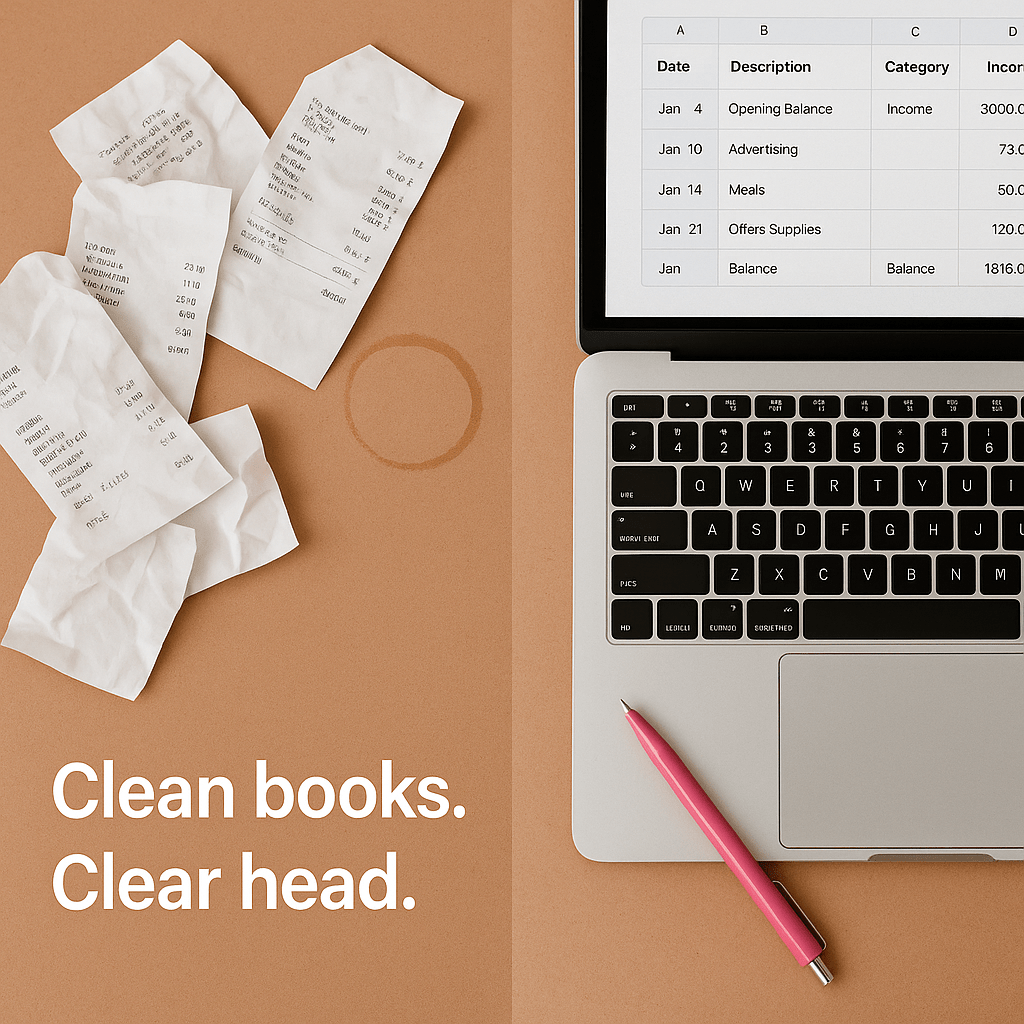
The good news? You don’t need a degree in accounting to get your books back in shape. You just need a quiet hour, a mug of something warm, and a simple cleanup plan. Because a clear set of books means a clear head, and that’s the best gift you can give yourself before tax season shows up uninvited.
It’s Not the Math, It’s the Mess
Nobody hates bookkeeping because of the math. The numbers are fine. It’s the mess that gets you.
It’s the “I’ll deal with this later” transactions. The mystery charges labeled “Ask My Accountant.” The vendor payments that almost balanced out, but not quite.
The truth is, your books probably aren’t bad, they’re just neglected. Like a junk drawer. Functional, but one loose screw away from chaos.
And here’s the thing: it doesn’t take a full overhaul to fix it. You just have to tidy the right corners.
Step One: Reconnect and Reconcile
Start by opening the file you’ve been avoiding. (Yes, that one.)
Make sure every account (bank, credit card, and PayPal) is still connected to your bookkeeping software. Then, reconcile through the last full month.
Match what’s on your screen to what’s in your bank. If the numbers don’t match, figure out why. And if you haven’t reconciled since summer, well…it’s going to be okay. A little pain now saves a lot of panic later.
When everything balances, take a deep breath. That’s one huge mental weight off your shoulders already.
Step Two: Clean Your Categories
The best way to make peace with your numbers is to make them make sense.
Go through your expense categories and fix what’s vague or messy. If everything’s hiding under “Miscellaneous,” you’re not helping your future self, you’re just leaving her a puzzle with no picture on the box.
Clean categories help you spot trends, prepare for deductions, and stop wasting time later when you need answers fast.
Think of it like cleaning out a closet. You don’t have to color-code the hangers; you just need to know where your shoes are.
Step Three: Check the Big Picture (Without Freaking Out)
Once things look reasonable, pull the three reports that actually matter:
- Profit & Loss — what came in, what went out.
- Balance Sheet — what you own vs. what you owe.
- A/R Aging Report — who still owes you money (because yes, they still exist).
If those reports look logical, you’re in great shape. If they don’t, at least now you know what needs fixing.
And hey…if your accountant looks happier when you hand these over, that’s a win too.
Step Four: Write a Note for Future You
Once you’re done, take five minutes to jot down what worked this year and what didn’t. Maybe you realized you need a better system for saving receipts. Or that you always forget to categorize expenses after road trips.
Write it down now, while it’s fresh. That note is your shortcut next year, your little time capsule of clarity.
Because this isn’t just about cleaning up the books. It’s about keeping your brain uncluttered, too.
Calm Over Chaos
A clean set of books doesn’t make you a better business owner, it just makes you a calmer one.
You don’t have to love bookkeeping. You just have to make peace with it.
Because when your numbers are clear, your head is too. And that’s the kind of clarity that makes the rest of your business easier.
So pour another cup of tea (or coffee, or cocoa, or a hot toddy, whichever you prefer!), open that file, and start with one small fix. You’ve got this.
 Backwoods Consulting
Leave a comment