
There’s a special kind of dread that comes from opening a spreadsheet you haven’t touched in months.
You double-click the file, watch it load, and immediately remember why you stopped looking at it.
Tabs named Copy of Final Draft (Real One). Numbers that don’t quite add up. Random notes to yourself like “fix this later” sitting in the margins like ghosts of good intentions.
You close it again. Maybe next week.
Except now it’s December, and “next week” is officially this week.
The good news? You don’t need to spend your holidays trapped in a vortex of formulas and frustration. You just need to do a little data check (a quick, honest look at your numbers) so you can head into the new year feeling grounded instead of guessing.
It’s Not About Perfection, It’s About Clarity
Most people don’t avoid their spreadsheets because they’re lazy. They avoid them because they’re tired.
When your data’s a mess, even opening the file feels heavy. You know it’s going to take time, and focus, and maybe a mild exorcism.
But here’s the thing: messy spreadsheets quietly steal your momentum. You spend twice as long trying to find what’s accurate, and you stop trusting your own numbers. You can’t make good decisions from guesswork.
Cleaning up your data isn’t about turning into an accountant. It’s about giving yourself a clear picture of where you actually stand.
Step One: Open the Tabs (Yes, All of Them)
Start by facing the thing head-on.
Open every single tab in that file. No shame, no sighing…just curiosity. What’s here? What still matters? What can go?
You might find:
- Duplicate sheets labeled v2, v2 real, and v2_final_FINAL.
- Blank columns from that project you swore you’d track.
- Old data you no longer need but couldn’t quite delete.
Rename what’s staying. Archive what’s not. If you’re worried about losing something important, move it into a separate file called “Archive_2024” and call it done.
This step alone will make you feel about 20% lighter.
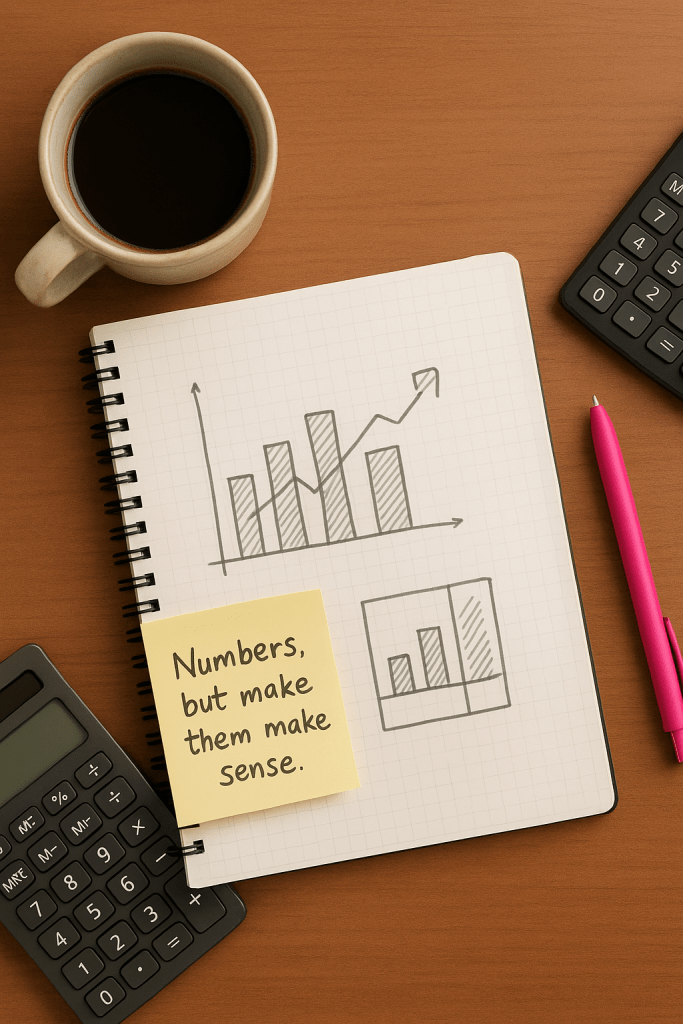
Step Two: Make the Numbers Make Sense
Now that you’ve cleared some space, start tidying up the data itself.
This isn’t about fancy formulas or pivot tables, it’s about consistency.
Make the columns uniform. Align decimals. Choose one color scheme and stick with it.
If you’re feeling brave, use conditional formatting to highlight outliers: red for overdue invoices, yellow for large expenses, green for incoming payments. Suddenly your data stops looking like chaos and starts acting like a dashboard.
You don’t need to overcomplicate it. You just need your numbers to tell the truth without yelling at you in fifteen fonts.
Step Three: Create a Quick “At-a-Glance” Page
Here’s where the magic happens.
Create one clean tab that summarizes your key numbers, the ones you actually care about.
Total income. Total expenses. Any unpaid invoices or upcoming bills.
You can link those cells directly to your existing sheets, or, if you’re done fighting with formulas, just type them in manually. The point isn’t automation; it’s awareness.
It’s the difference between knowing and hoping.
Step Four: Write Down What You Notice
Once things look reasonable again, take a step back.
What stands out? Are your biggest expenses where you expected them? Do you have income streams that dried up or categories that don’t make sense anymore?
Write down anything that jumps out; not as a report, just as a note to yourself. Because “I’ll remember this later” is the biggest lie in small business.
A few quick notes now will make next year’s planning a hundred times easier.
Step Five: Close the File (Without Guilt)
Here’s the part nobody talks about…that moment of quiet satisfaction when you finally save and close a file that no longer feels hostile.
You don’t need to make it perfect. You don’t even need to make it pretty. You just need it to be clear enough that future-you can open it without flinching.
That’s the win.
Order = Calm
This isn’t about data for data’s sake. It’s about the feeling that comes when your numbers finally match reality; when you can see, at a glance, what’s working and what’s not.
That clarity isn’t just nice to have. It’s peace of mind. It’s better decisions. It’s fewer “what was that expense again?” moments at 10 p.m.
And if you do it now, you’ll walk into the new year with more focus, less chaos, and the kind of quiet confidence that comes from knowing your numbers are finally on your side.
 Backwoods Consulting
Leave a comment